Recreational Boat Lifts: Types, Applications, and Maintenance
At Harbor Bay Marine Industries, we bring decades of hands-on experience in marine construction on Florida's Treasure Coast. From custom dock building to seawall reinforcement and boat lift installations, our team has helped countless waterfront property owners protect their boats and enhance their lifestyle. We understand that every shoreline is different — from coastal areas with strong tides to calm inland waters — and we take pride in guiding homeowners to the perfect lift system for their vessel, dock, and environment.
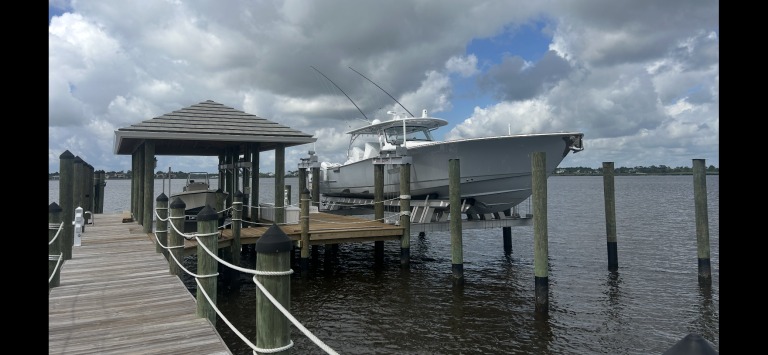
Owning waterfront property on Florida's Treasure Coast comes with the privilege of direct access to boating, fishing, and a variety of water sports. But to truly protect your investment, a boat lift is essential. The right lift not only extends the life of your boat by preventing corrosion and hull damage but also provides safe, convenient access to the water.
At Harbor Bay Marine Industries we know choosing the right lift depends on your location— coastal tidal waters vs inland lakes and rivers—as well as whether you're operating in freshwater or saltwater. Below, we outline the main categories of recreational boat lifts, their ideal applications, and what you can expect in terms of maintenance.
Categories of Recreational Boat Lifts
1. Floating Lifts
- Rinse thoroughly after saltwater use
- Lubricate moving parts and inspect floats/pumps
- Watch for marine growth and clean regularly
2. Elevator (Vertical Track) Lifts
- Inspect cables, pulleys, and tracks routinely
- Lubricate drive components
- Rinse in saltwater environments to minimize corrosion
3. Piling-Mount (Cradle) Lifts
- Semi-annual inspections of cables, bolts, and bunks
- Anti-corrosion coatings for saltwater
- Tighten and adjust components as needed
4. Cantilever (Freestanding) Lifts
- Clean aquatic residue
- Inspect winch, cables, and pulleys
- Lubricate moving parts
5. Beamless Lifts
- Synchronization checks
- Motor and drive inspections
- Lubrication of all moving parts
6. Boathouse Lifts
- Inspect lift hardware as well as the roof and framing
- Lubricate moving components
- Prevent moisture intrusion into the structure
Freshwater vs. Saltwater Considerations
🌊 Saltwater Environments
Risks: Corrosion from salt exposure.
Solutions: Use marine-grade aluminum, stainless steel, or galvanized steel. Rinse with fresh water after use, apply protective coatings, and schedule frequent inspections.
🏞️ Freshwater Environments
Risks: Biofouling (algae, barnacles, mussels).
Solutions: Use smooth or treated surfaces to minimize growth, apply antifouling coatings, and perform periodic cleanings.
Maintenance Recommendations
Regardless of lift type or water conditions, routine care is critical:
- Rinse all metal parts thoroughly after exposure to saltwater
- Lubricate moving components regularly
- Inspect cables, pulleys, tracks, and bolts every 6 months
- Clean off algae, barnacles, or debris to prevent long-term damage
- Service agreements with professionals can extend the life of your lift and ensure safe operation
Final Thoughts
Choosing the right boat lift is not a one-size-fits-all decision. Your shoreline, water depth, and environment — whether tidal coastal waters or calm inland lakes — play a significant role in determining the best option. Add in the difference between freshwater and saltwater conditions, and the right choice becomes even more critical to protecting your boat. Learn more about our Boat Hoist Lift Service.
That's where Harbor Bay Marine Industries comes in. With years of experience in marine construction, dock building, and boat lift installation, we understand how to match the right system to your specific needs and environment. Our team serves homeowners across the Treasure Coast, including St. Lucie, Stuart, Palm City, and Sewall's Point, with expert advice, precision installation, and dependable maintenance.
Call us today at 772-335-7080 or 772-485-2298 to schedule your boat lift consultation.