Shoreline Erosion in Florida: What Every Waterfront Property Owner Needs to Know
After three decades of coastal management along Florida's diverse shorelines, I've discovered that successful erosion control depends on three fundamental factors: understanding your specific shoreline dynamics, navigating the complex regulatory environment, and selecting solutions that withstand challenging climate conditions. Coastal Solutions Group has built its reputation by delivering integrated approaches to protecting valuable properties and fragile coastal ecosystems.
Florida's shoreline erosion challenges differ significantly from those of other coastal regions. Our combination of tropical storms, sea level rise, and year-round wave action creates erosion patterns many property owners underestimate until significant damage occurs.
Understanding Erosion Fundamentals
Shoreline erosion results from complex interactions between water, wind, and land that vary dramatically based on your specific location and exposure.
Wave energy serves as the primary erosive force along most Florida shorelines. This energy directly correlates with your property's exposure distance (fetch) and typical wind patterns—properties facing open ocean experience fundamentally different wave impacts than those on protected bays or Intracoastal waterways.
Sediment transport moves sand and soil parallel to the shoreline through longshore currents. These natural conveyor belts maintain beach equilibrium when undisturbed but create erosion hotspots when interrupted by structures or channels.
Water fluctuations from tides, seasonal changes, and rising sea levels determine where wave energy concentrates along your shoreline. These variations create vulnerable zones that experience accelerated erosion compared to surrounding areas.
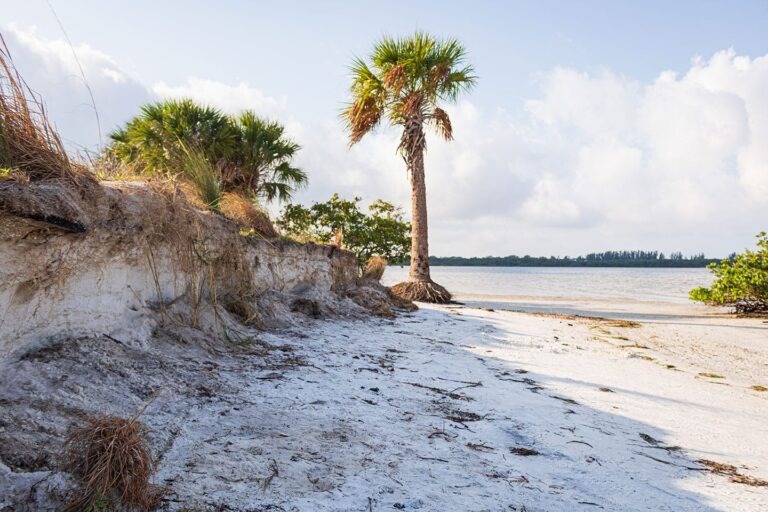
🌊 Erosion Reality: Under normal conditions, many Florida waterfront properties lose between 6 and 24 inches of shoreline annually. This gradual loss often goes unnoticed until significant property damage occurs or valuable trees begin to fall.
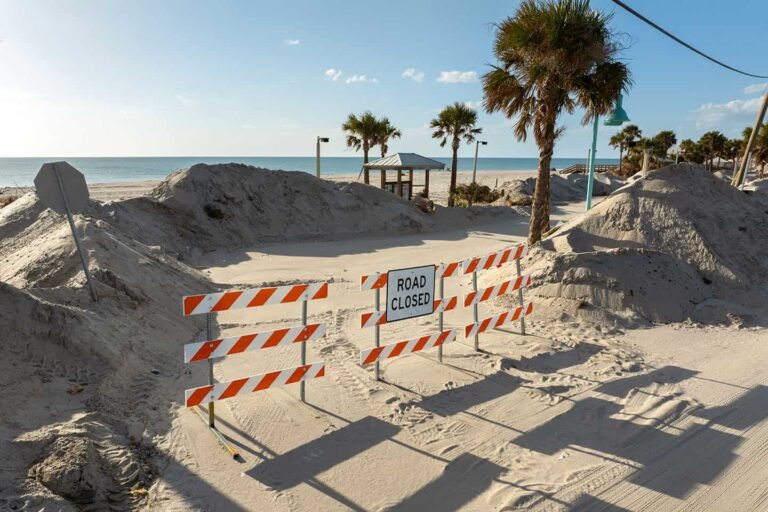
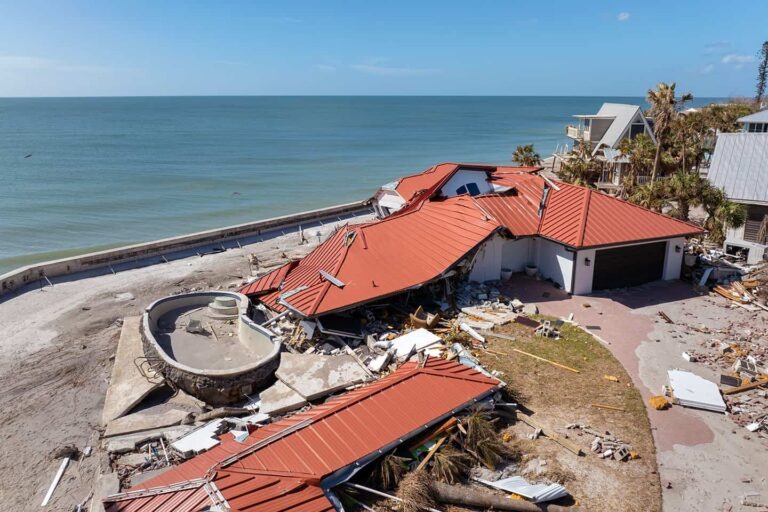
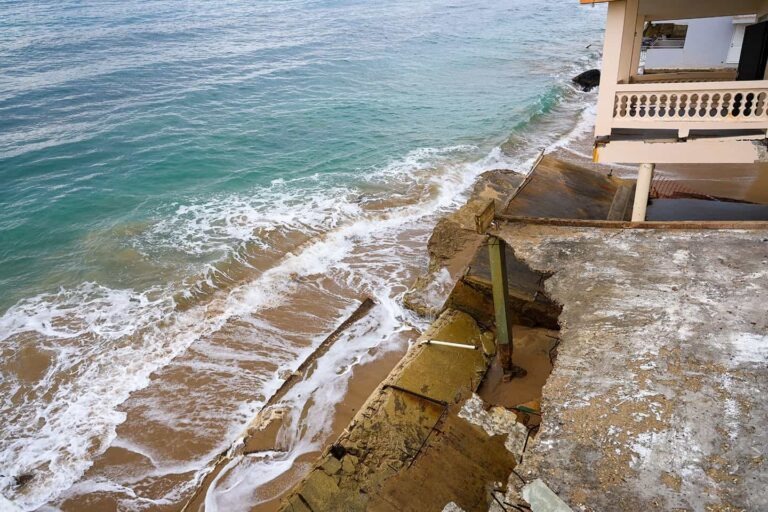
Storm impacts cause dramatic shoreline changes in compressed timeframes. A single major hurricane can remove 15-30 feet of shoreline that might have taken decades to erode under normal conditions. Effective protection plans must address both everyday conditions and extreme events.
Human activities significantly influence erosion patterns. Boat wakes, upstream development, vegetation removal, and drainage alterations can accelerate natural erosion rates by 200-400% in vulnerable areas. Your erosion solution must account for both natural and human-influenced factors.
Navigating Florida's Regulatory Requirements
Shoreline protection in Florida involves multiple agencies with distinct priorities and overlapping jurisdictions. Understanding each agency's specific concerns streamlines the approval process.
The Florida Department of Environmental Protection focuses primarily on habitat protection and water quality impacts. Their review process examines how your project affects marine vegetation, wildlife corridors, and water circulation patterns. Most residential projects require an Environmental Resource Permit that evaluates these specific factors.
The U.S. Army Corps of Engineers maintains jurisdiction over navigable waters and wetland impacts. Their engineers evaluate whether your erosion control measures could affect navigation, alter water flow patterns, or impact protected habitats. Projects extending into the water typically require federal permits and state approvals.
⏱️ Timeline Tip: Begin permit preparations at least six months before your target construction date. Agency coordination takes significantly longer than most homeowners expect, especially during busy summer construction seasons.
Local government requirements vary dramatically across Florida counties and municipalities. Many coastal communities maintain specific shoreline protection ordinances that exceed state and federal standards. Some jurisdictions prohibit certain solution types entirely, particularly hardened structures like seawalls in environmentally sensitive areas.
Coastal Construction Control Line permits apply to properties seaward of state-designated control lines. These additional permits evaluate storm impact vulnerability, sea turtle habitat, and public beach access considerations. The CCCL program imposes strict engineering requirements for structures in these high-hazard zones.
Submerged land authorizations may be required since Florida owns most land below the mean highwater line. Projects extending into the water often need consent from the state as the submerged landowner, adding another layer to the approval process.
Environmental Compliance Essentials
Florida's marine protection regulations carry substantial penalties for unauthorized shoreline work. Understanding these requirements before planning prevents costly complications and potential restoration orders.
Seagrass protection dictates feasible project locations and design parameters in many areas. These underwater plants provide essential habitat and enjoy strong legal protection. Erosion control plans must demonstrate minimal impact on existing beds through appropriate design and construction methods.
⚠️ Violation Alert: Seagrass damage penalties start at $25,000 per impacted area, plus mandatory restoration costs often exceeding the original penalties. Always verify seagrass presence before finalizing any in-water design.
Mangrove preservation laws protect these valuable shoreline stabilizers throughout Florida. The Mangrove Trimming and Preservation Act establishes strict guidelines for any work near these trees. Unauthorized removal typically triggers substantial penalties and mandatory restoration requirements.
Sea turtle nesting considerations affect design options and construction timing along many Florida beaches. Projects on nesting beaches typically prohibit construction during nesting season (May through October) and require specific lighting and profile designs to avoid interference with these protected species.
Essential Fish Habitat designations trigger additional federal review requirements in many coastal areas. These designations protect areas vital to commercial and recreational fisheries. Projects in these zones require additional documentation demonstrating minimal impact on these valuable resources.
Pre-construction environmental surveys document existing conditions and establish baseline measurements for compliance monitoring. These assessments typically cost $1,500-3,500 but prevent much larger penalties for undocumented impacts on protected resources.
Erosion Control Options for Florida Shores
Selecting the proper erosion control approach requires balancing protection needs, environmental impacts, regulatory constraints, and budget realities. No single solution works for all Florida shorelines.
Living shoreline approaches combine natural elements like marsh grasses, oyster reefs, and native vegetation with limited structural components. These systems absorb wave energy while maintaining ecosystem functions and adapting to changing conditions.
💡 Performance Insight: Properly designed living shorelines demonstrate 30-45% better wave energy reduction during tropical storms than traditional seawalls in many Florida locations while providing superior habitat benefits.
Beach nourishment adds compatible sand to restore beach width and protective capacity. This "soft" approach maintains natural processes and public access while providing storm protection. However, it requires periodic renewal as erosion continues to remove sand from the system.
Revetments use stone or concrete structures to armor shorelines against wave action. These sloped structures dissipate wave energy more effectively than vertical walls but require more horizontal space for proper installation. Well-designed rock revetments can provide 30+ years of protection with minimal maintenance.
Seawalls create vertical barriers between land and water. While providing definitive property boundaries, they reflect wave energy rather than dissipating it, frequently causing increased erosion at the structure base and on neighboring properties. Modern designs incorporate wave absorption features to minimize these impacts.
Breakwaters and sills create protective offshore barriers that reduce wave energy before it reaches the shoreline. These structures work well in higher-energy environments but require substantial in-water construction and corresponding permitting challenges.
Hybrid systems combine multiple techniques to address complex shoreline conditions. Most successful Florida erosion control projects now incorporate complementary elements rather than relying on single-approach solutions. These integrated designs provide redundant protection while minimizing environmental impacts.
Design for Florida's Extreme Conditions
Florida erosion control structures must withstand tropical storms, aggressive marine organisms, and changing sea levels to provide reliable long-term protection.
Foundation design determines structural survival during significant storms. Proper embedment depth must account for potential scour during extreme events. Most failed erosion control structures in Florida result from inadequate foundation design rather than material failures.
🌪️ Storm Engineering: Hurricane-driven waves can create scour depths exceeding 5 feet below standard beach profiles. Adequate protection requires foundation systems extending at least 2 feet below the maximum anticipated scour depth.
Design elevations must consider both current conditions and future projections. Sea level rise estimates for Florida range from 12 to 24 inches by 2050, requiring forward-thinking height allowances for structures that last multiple decades.
Wave energy calculations determine necessary structural dimensions and material specifications. Engineering models must account for typical conditions and 50-year storm events that generate forces exceeding 2,000 pounds per square foot on vertical surfaces.
Drainage provisions prevent hydrostatic pressure buildup behind structures during heavy rainfall and storm surge events. Inadequate drainage design causes more structural failures than direct wave action in many Florida applications.
Transition zone design prevents flanking erosion where structures meet unprotected shorelines. These vulnerable areas require special attention during the design and construction phases to avoid end-around failures from compromising the entire system.
Material Selection for Saltwater Durability
Florida's aggressive marine environment rapidly degrades many standard construction materials, and improper material selection dramatically impacts performance and maintenance requirements.
Marine-grade concrete specifications differ significantly from standard construction applications. Proper mix designs for Florida shorelines require:
- Minimum 5,000 PSI compressive strength
- Maximum 0.40 water-cement ratio
- Corrosion inhibiting admixtures
- Proper concrete cover over reinforcement (minimum 3 inches)
💰 Material Investment: Marine-grade concrete typically costs 30-40% more than standard construction mixes but provides 3-4 times longer service life in saltwater environments. This investment dramatically reduces lifetime ownership costs.
Steel reinforcement requires special consideration in marine applications. Epoxy-coated, galvanized, or preferably fiber-reinforced polymer (FRP) reinforcement provides necessary corrosion resistance. Standard "black" rebar typically fails within 7-10 years in saltwater environments despite concrete protection.
Stone selection affects both stability and habitat value in revetment structures. Granite and limestone provide excellent durability, while sandstone and concrete rubble should be avoided due to poor long-term performance in marine environments.
Geotextile materials prevent soil migration while allowing water movement. Marine-grade fabrics with UV protection maintain integrity for 15-20 years in exposed applications, while standard landscaping fabrics typically fail within 2-3 years of saltwater exposure.
Fastener selection critically impacts structural integrity. Only Type 316L stainless steel should be used for critical connections in saltwater environments. Lower grades corrode rapidly in Florida's aggressive coastal conditions, creating dangerous structural weaknesses.
Financial Planning and Long-Term Value
Shoreline protection represents significant investment that directly impacts property values and long-term ownership costs. Understanding complete project costs and maintenance requirements guides realistic budgeting.
Project costs vary dramatically based on site conditions, protection method, and regulatory requirements. Simple living shoreline installations might start around $150-200 per linear foot, while engineered seawalls typically range from $500-1,200 per foot for standard residential applications.
Permitting expenses often exceed initial estimates. Environmental assessments, engineering designs, agency fees, and consultant reports typically add $5,000-15,000 to project budgets before construction begins.
Maintenance requirements differ significantly among protection types. Living shorelines need periodic vegetation management and occasional replanting. Structural solutions require regular inspections and may need repairs every 5-10 years depending on storm exposure.
Property value impacts usually justify investments in proper erosion control. Waterfront buyers increasingly demand protected shorelines, and quality installations often return 70-90% of their cost in enhanced property values while preventing much larger losses from unchecked erosion.
Selecting Qualified Marine Contractors
Erosion control success depends heavily on contractor expertise in coastal engineering, environmental compliance, and Florida's regulatory landscape. Proper contractor selection prevents costly mistakes and ensures long-term performance.
Look for contractors with specific Florida coastal experience and documented success with similar projects. Generic construction experience rarely translates well to complex shoreline protection work.
Verify proper licensing and insurance coverage. Florida requires specific marine contractor licenses for most shoreline work. Insurance must cover marine construction risks that standard policies exclude.
Request detailed references from recent projects similar to your needs. Speak directly with past clients about contractor performance, communication, and post-installation support.
Evaluate proposed designs for site-specific appropriateness. Generic approaches rarely succeed given Florida's varied shoreline conditions and environmental requirements.
Professional Consultation Services
Your shoreline deserves protection strategies explicitly designed for site conditions and property requirements. Professional evaluation identifies optimal approaches while navigating Florida's complex regulatory landscape.
Harbor Bay Marine Industries offers comprehensive consultation services for shoreline protection planning and installation. Contact owner Scott Szafranski at 772-335-7080 to discuss your project requirements. With over twenty years of Treasure Coast marine construction experience, Scott provides expert guidance tailored to your specific property and regulatory environment.
This information serves as general guidance for shoreline erosion planning in Florida. Specific requirements vary significantly by location and project scope. Professional consultation and proper permitting remain essential before beginning any shoreline protection activities.