
Over two decades working Florida’s waterfront properties has taught me that boat hoist installations succeed or fail based on three critical factors: understanding your specific site conditions, navigating the regulatory landscape efficiently, and choosing equipment that survives our unique climate challenges. Harbor Bay Marine Industries has built its reputation by mastering these elements while delivering solutions that protect both investments and marine environments.
Florida’s boat hoist market differs significantly from other coastal regions. Our year-round boating season, aggressive marine environment, and complex environmental protections create installation challenges that catch many property owners unprepared.
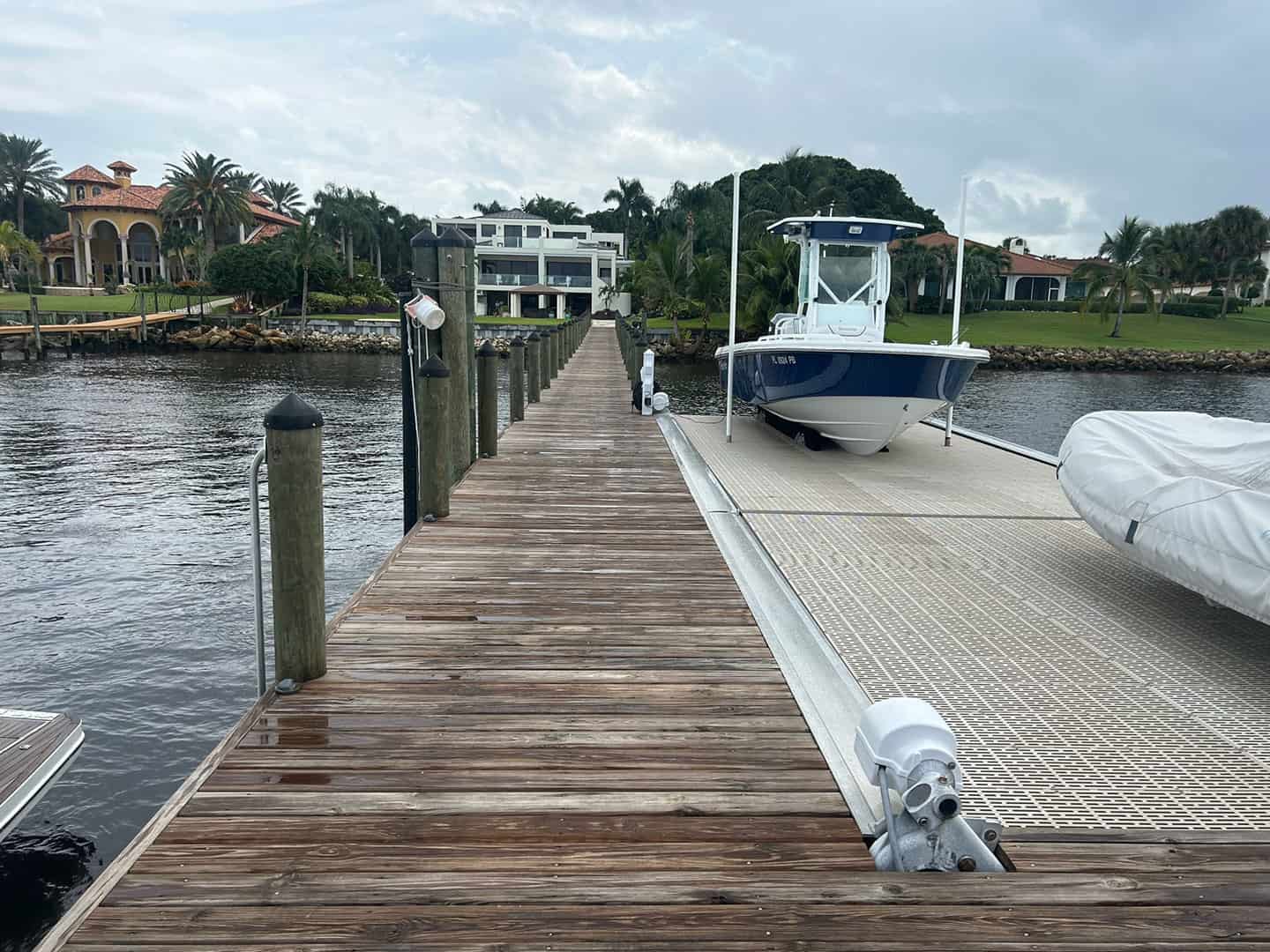
The permit pathway for boat hoists involves multiple agencies with distinct priorities and review processes. Success requires understanding each agency’s specific concerns and timing requirements.
Florida Department of Environmental Protection focuses primarily on habitat protection and water quality impacts. Their review process examines how your installation affects circulation patterns, marine vegetation, and wildlife corridors. Applications require detailed site plans showing existing conditions and proposed modifications.
The Army Corps maintains jurisdiction over navigable waters and flood control systems. Their engineers evaluate whether your hoist installation could affect vessel traffic or alter natural water flow patterns. Processing times vary significantly based on project complexity and seasonal workload.
Municipal authorities handle zoning compliance, structural requirements, and aesthetic considerations. Waterfront communities often maintain specific design standards that go beyond basic safety requirements. Some areas restrict lift heights or require architectural compatibility with existing structures.
Submerged land leasing adds another step most property owners don’t anticipate. Since Florida owns most natural water bottoms, your hoist foundation requires state approval through a lease agreement. This process includes demonstrating actual boating need rather than speculative future use.
💡 Timeline Tip: Begin documentation gathering at least eight months before your target installation date. Agency coordination takes significantly longer than most homeowners expect.
Florida’s marine protection regulations carry substantial financial penalties and project delays for violations. Understanding these requirements before planning prevents costly redesigns and legal complications.
Seagrass mapping determines feasible installation locations and design parameters. These underwater plants provide essential habitat services and enjoy strong legal protection. Installation plans must demonstrate zero impact on existing beds through elevated designs, alternative positioning, or seasonal timing restrictions.
⚠️ Violation Alert: Seagrass damage penalties begin at $50,000 per damaged area, plus restoration costs that can exceed $100,000 for significant impacts.
Manatee protection zones affect construction timing and methods throughout much of coastal Florida. These seasonal restrictions typically run from November through March in designated areas. Wildlife agencies provide detailed mapping tools showing protection levels and timing requirements.
Coral reef proximity in Southeast Florida triggers additional oversight requirements. Sediment control measures become critical during construction to prevent reef damage. Some installations require continuous water quality monitoring throughout the construction period.
Pre-construction biological surveys document existing conditions and establish baseline measurements for compliance monitoring. These studies typically cost $2,000-5,000 but prevent much larger penalties for undocumented impacts.
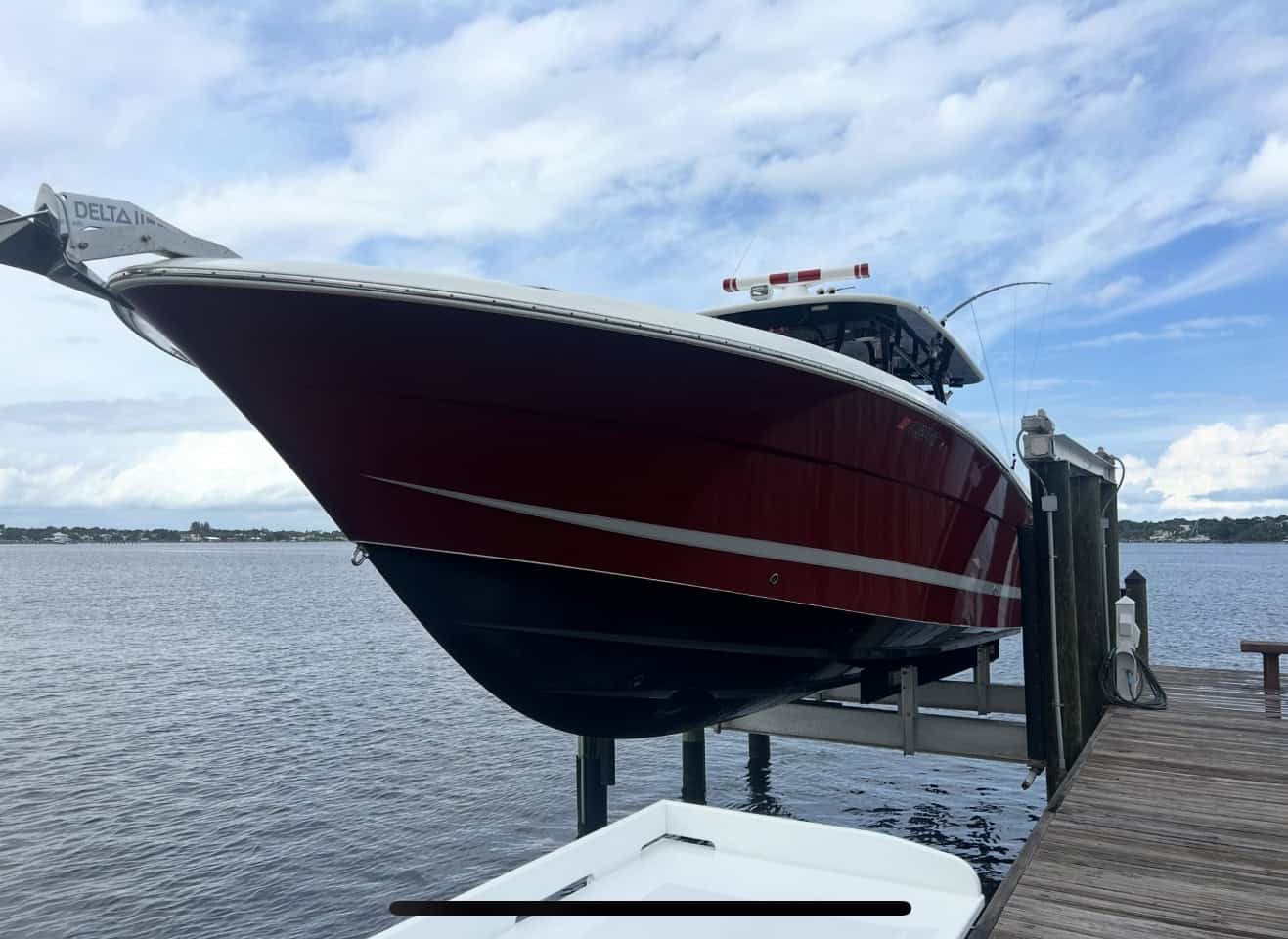
Florida boat hoists must withstand our most severe weather conditions while maintaining operational reliability. Hurricane Andrew’s aftermath in 1992 fundamentally changed how we approach marine construction in this state.
Foundation systems determine structural survival during major storms. Helical pier technology has largely replaced traditional driven piles for residential applications. These spiral anchors penetrate 20-40 feet into stable substrate layers, creating exceptional resistance to both compression and uplift forces.
🌪️ Storm Engineering: Storm surge calculations now include 12-foot surges for much of the coast, with higher requirements in specific zones. Your hoist foundation must resist upward forces exceeding 8,000 pounds per anchor point during these conditions.
Lift selection significantly impacts storm survival rates. Four-post configurations provide superior stability but require more complex environmental permitting. Floating systems avoid many uplift issues by riding with surge levels, though they need robust anchoring systems and flexible utility connections.
Hardware specifications become critical in saltwater environments. Type 316L stainless steel represents the minimum standard for critical connections. Aluminum components must use 5086 or 6061 alloys specifically rated for marine exposure.
Emergency preparation systems should include quick-disconnect capabilities for utilities and rapid boat removal procedures. Some installations incorporate submersible features that allow the entire hoist to go underwater during extreme surge events.
Twenty-five years of Florida marine construction has shown me which materials survive and which fail prematurely in our aggressive saltwater environment.
Stainless steel selection requires understanding the difference between grades and their specific applications.
💰 Material Investment: Type 316L stainless steel costs approximately 40% more than Type 304, but critical fasteners and structural connections justify this upgrade through extended service life in saltwater environments.
Aluminum alloy selection affects both performance and compatibility with other materials. Marine-grade 6061-T6 aluminum provides excellent strength-to-weight ratios while resisting corrosion.
🚨 Critical Warning: Direct contact between stainless steel and aluminum creates galvanic corrosion that destroys aluminum components within months. Always use proper isolation materials between dissimilar metals.
Synthetic cable systems have revolutionized hoist reliability in saltwater applications. Modern high-molecular-weight polyethylene cables resist UV degradation while maintaining breaking strength superior to steel wire rope. These cables also eliminate the galvanic corrosion issues common with mixed-metal installations.
Coating systems require regular maintenance to remain effective. Marine-grade powder coatings typically last 7-10 years in Florida conditions before requiring renewal. Budget $1,500-3,000 for coating restoration on typical residential hoists.
Composite materials offer excellent durability for non-structural applications but require careful selection. Some composites become brittle under continuous UV exposure, while others maintain flexibility and strength for decades.
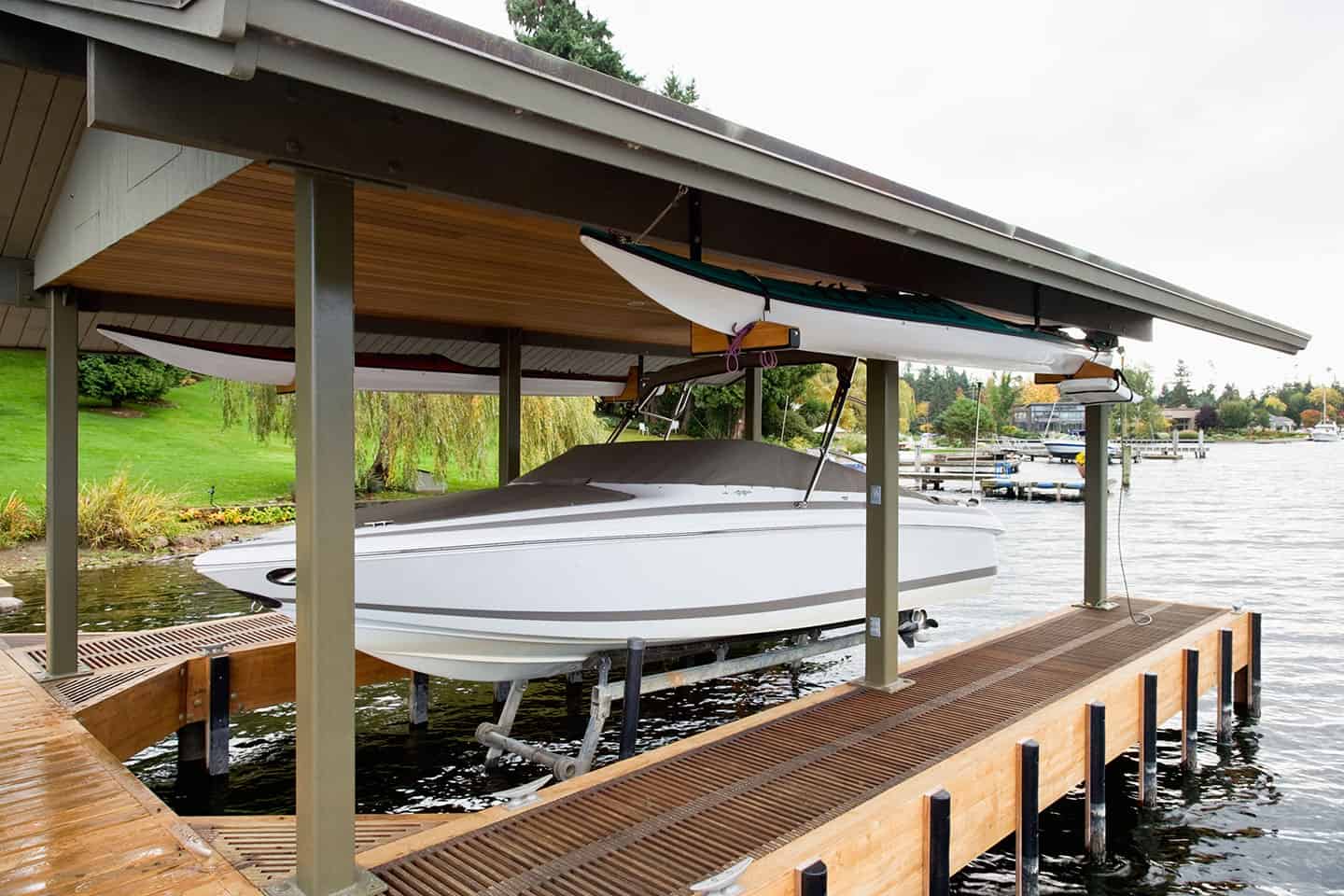
Hoist selection extends far beyond basic weight capacity calculations. Your boat’s hull configuration, slip dimensions, water depth variations, and usage patterns all influence the optimal system choice.
🔧 Sizing Reality Check: Weight calculations must include your boat’s dry weight plus fuel, water, gear, and engine oil capacities. Add 25% safety margin to this total for proper sizing. Many boat owners underestimate loaded weight by 15-20%, leading to marginal performance and premature equipment failure.
Four-post lift systems handle heavier boats and provide maximum stability in rough water conditions. However, they require larger environmental footprints and typically need more complex permitting due to increased pile requirements.
Floating pneumatic systems work well for lighter boats in protected waters. Modern air bag technology provides reliable operation with minimal maintenance requirements. These systems adapt automatically to changing water levels and require less robust foundations.
Vertical lift systems maximize slip space efficiency but limit boat access when in the lowered position. They work best for frequently used boats in narrow waterways where space constraints prohibit other configurations.
Slip dimensions affect more than just hoist sizing. Consider dock access routes, utility placement, and maintenance space requirements during planning. Many installations fail to account for the additional width needed for safe boat positioning.
Boat hoist installation combines specialized skills including marine construction, mechanical systems, electrical work, and environmental compliance. After accounting for mistakes, delays, and permit complications, DIY attempts typically result in higher total costs.
Marine contractors with Florida-specific experience understand local permitting quirks and environmental requirements that vary significantly by region. They maintain working relationships with regulatory agencies that can expedite approvals or resolve issues that stall amateur applications for months.
Equipment requirements make professional installation nearly mandatory. Pile driving equipment, marine cranes, and underwater installation tools represent significant investments that aren’t practical for one-time use.
Contractor selection should emphasize recent experience with similar installations in your specific area. Regulatory requirements and environmental conditions vary dramatically even within the same county.
⭐ Contractor Selection: Request references from projects completed within the past 18 months. Regulatory requirements and environmental conditions vary dramatically even within the same county.
Detailed quotes should specify all materials by grade and manufacturer, include permitting assistance, and provide warranty coverage for both equipment and installation. The lowest bid often becomes the most expensive option after accounting for corners cut during installation.
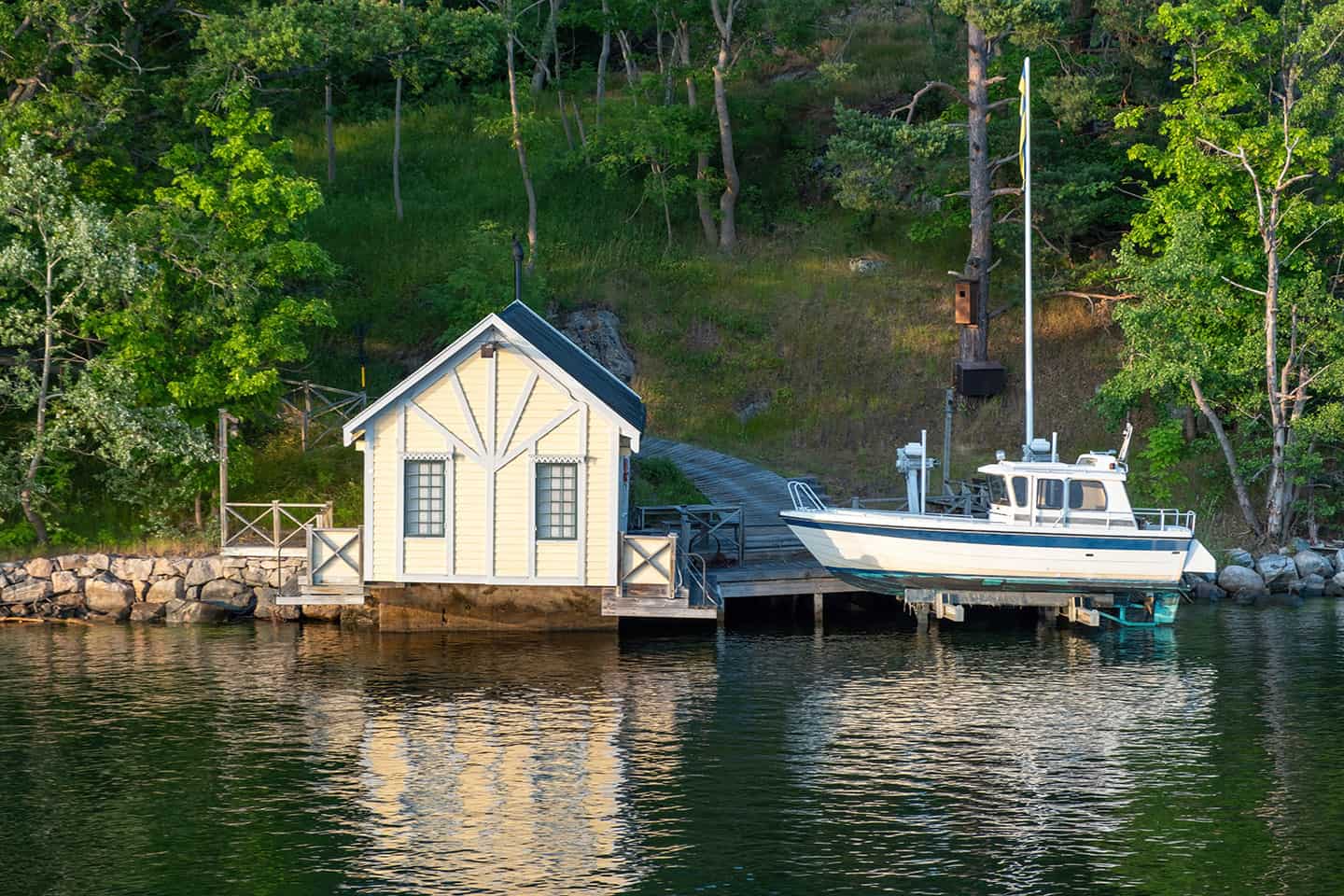
Boat hoist pricing varies dramatically based on capacity requirements, site complexity, regulatory requirements, and equipment specifications. Basic 10,000-pound pneumatic systems typically start around $12,000-15,000 installed, while heavy-duty 20,000+ pound four-post systems can exceed $45,000-65,000 for complex installations.
Permitting costs alone often reach $3,000-8,000 when including application fees, survey requirements, biological assessments, and consultant reports. Sites with environmental complications may require additional engineering studies or mitigation measures that add $5,000-15,000 to project costs.
💸 Budget Reality: Budget contingencies of 30-40% above initial estimates to account for unexpected complications that marine construction consistently reveals. Substrate conditions, utility complications, and regulatory changes during construction can significantly impact final costs.
Operating expenses include electrical costs for powered systems, annual maintenance, and periodic component replacement. Plan for $500-1,200 annually in maintenance costs depending on system complexity and usage levels.
Insurance implications vary by location and installation type. Some policies require additional liability coverage for dock structures, while others exclude coverage for hoists not installed by licensed marine contractors.
Property value impacts typically justify the investment for quality installations. Waterfront buyers increasingly expect boat lift capabilities, and proper installations often return 60-80% of their cost in added property value.
Primary Regulatory Contacts
Environmental Guidance
Industry Standards and References
Professional Resources
Successful boat hoist installation in Florida requires thorough planning, realistic budgeting, and professional expertise. Environmental protection requirements, extreme weather considerations, and complex permitting processes make this a challenging project for inexperienced property owners.
Start planning early and engage qualified professionals familiar with Florida’s unique requirements. Permit processing takes longer than expected, and shortcuts during installation create expensive problems later.
Each waterfront property presents distinct challenges that require customized solutions. Generic approaches rarely succeed given the variety of environmental conditions, regulatory requirements, and site constraints throughout Florida.
The investment in proper installation pays dividends through reduced boat maintenance, protection from storm damage, and enhanced property values. Quality installations provide decades of reliable service while protecting both your investment and Florida’s marine environment.
Your waterfront property deserves a boat hoist solution designed specifically for your site conditions and vessel requirements. Professional evaluation identifies optimal approaches while navigating Florida’s complex regulatory landscape.
Harbor Bay Marine Industries offers comprehensive consultation services for boat hoist planning and installation. Contact owner Scott Szafranski at 772-335-7080 to discuss your project requirements. With over twenty years of Treasure Coast marine construction experience, Scott provides expert guidance tailored to your specific property and regulatory environment.
This information serves as general guidance for boat hoist planning in Florida. Specific requirements vary significantly by location and project scope. Professional consultation and proper permitting remain essential before beginning any marine construction activities.